
Solution Feature

Manufacturing Analytics Copilot

An AI module that automatically searches connected machine data, recognizes patterns and makes visible which systems have potential for improvement, which process parameters drive rejects and which factors influence availability.

Contact us

Functional classification

What the co-pilot is for

The Copilot is an AI extension of the Bytefabrik platform. It builds on existing production data, alarms and technical context information and adds an additional level of processing and interpretation.

The aim is not to replace traditional analysis interfaces, but to guide teams more quickly to relevant contexts, questions and next steps in the analysis.

The co-pilot not only searches for known messages. It actively evaluates the available data with the help of AI, recognizes recurring patterns and automatically highlights the correlations that are really relevant for quality, availability and continuous improvement.
What the co-pilot automatically finds in the data

Copilot continuously searches connected production and machine data for patterns that often become visible too late or only with a great deal of manual effort in day-to-day operations.

01

Making improvement potential visible at system level

Copilot automatically searches connected machine data for recurring patterns and highlights systems, lines or areas where performance, stability or quality can be specifically improved.

02

Recognize influential process parameters

Instead of just describing individual alarms, the copilot shows which parameters, states or combinations are typically associated with high scrap, rework or unstable processes.

03

Classify drivers for availability and downtimes

The AI links historical data, events and production context and makes visible which factors influence availability, which patterns occur before disruptions and where preventive action can be taken.

How the co-pilot is used in everyday life

Less reading, more product feel

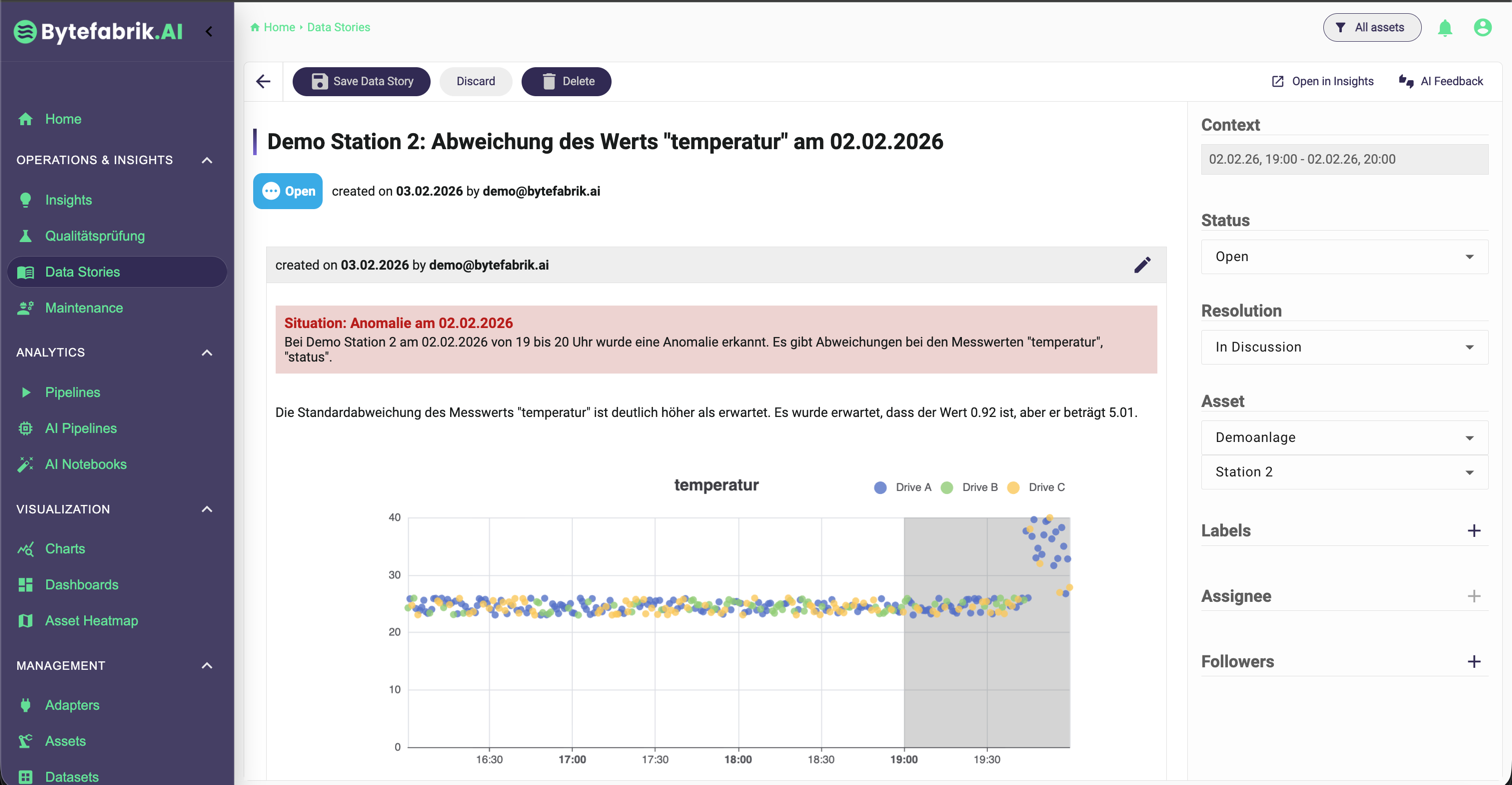
AI-generated data story
Fully automatic fault analyses

AI-generated data stories

Conspicuous patterns are automatically translated into comprehensible stories with charts, context and concrete indications of areas for improvement.

More about Data Stories

How the copilot works

The Copilot combines automatic pattern search, context processing and interaction based on the same platform data.

Event detection and prioritization

Anomalies, alarms and patternsConspicuous situations are identified and prioritized on the basis of existing production data.
Contextual classificationSignals are not considered in isolation, but in connection with line, station and course.

Preparation and explanation

Automatically generated summariesAnomalies are presented in a comprehensible form with context, progression and notes.
Data stories as a knowledge formatFindings can be recorded in a structured manner and reused for later cases.

Interaction and follow-up steps

Questions in natural languageTeams can specifically ask about the causes, patterns or effects of a situation.
Notes on next analysesThe co-pilot refers to obvious next tests instead of just providing a single answer.

Operation and traceability

Documented cases and progressionProcessed situations remain comprehensible in the team and can be revisited later.
Embedding in platform and governanceThe function uses the same rights, data and operating logic as the other modules on the platform.

Prerequisites and embedding

What the function is based on

Common database

The Copilot is based on existing production, alarm and context data and supplements it with an additional evaluation layer.

Structured production context

Assets, stations, process references or product contexts must already be technically describable so that signals can be meaningfully categorized.

Integration into existing analysis processes

The Copilot does not replace data collection or specialist applications, but supports teams in interpreting and prioritizing existing information.

Typical operation sequence

In practice, the copilot is not created in isolation, but as an extension of an existing data and analysis environment.

01Data basis

Making production data and context available

First of all, signals, alarms, histories and relevant system or process contexts must be available on the platform.

02Recognition

Recognize and bundle conspicuous situations

The co-pilot identifies relevant events and prepares them in a structured way with history, context and initial information.

03Classification

Ask, classify, investigate further

Teams use chat, story views or linked analyses to categorize the situation more quickly.

04Knowledge

Keep insights available in the team

Documented cases and recurring patterns are retained and can be used again for future incidents.

Demo

Experience Bytefabrik live

Arrange a demo to get to know the platform, analysis and AI functions based on your questions.

Book a demo