

Manufacturing Insights
Turnkey analytics for your production: plant analysis, fault analysis, machine status, process analysis, and product lifecycle data expand the IoT Data Hub.
Explore Manufacturing Insights →
IoT Data Hub
A single, scalable software solution for machine data acquisition, processing, and visualization. AI pipelines and AI notebooks reduce development effort.
The IoT Data Hub has everything you need to collect, organize, and make machine data available for analysis. This integrated architecture enables a seamless user experience and a consistent security model. This saves time and effort during setup and reduces the complexity of your application landscape.
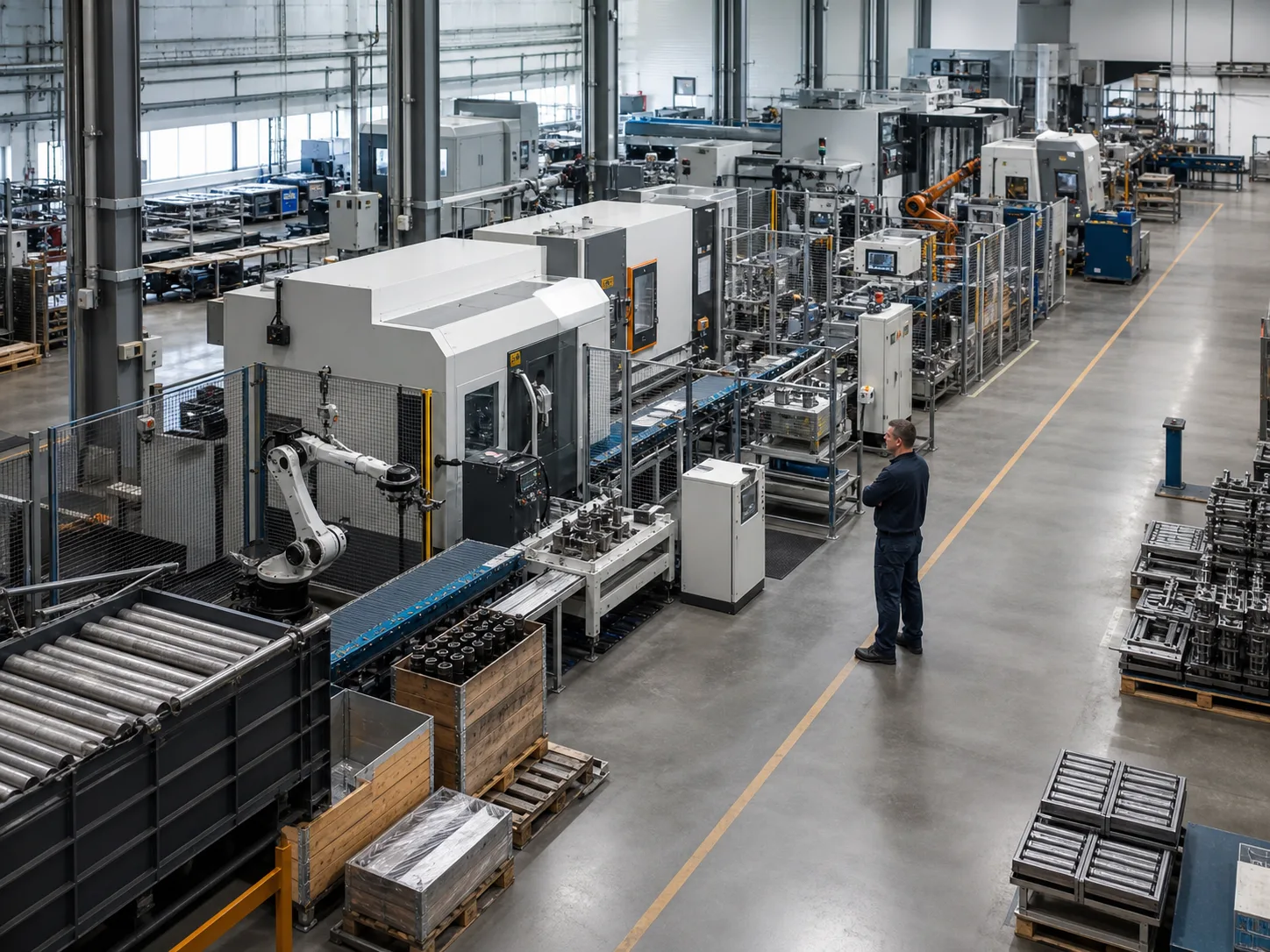
Machines and systems provide data in various formats. Connections and mappings are constantly being reestablished.
Data collection, storage, visualization, and analysis are often handled using separate tools. This reduces flexibility and increases maintenance efforts.
Loading, cleaning, calculating, and visualizing data: It often takes a long time to answer a business question.
Segmented networks, data sovereignty, and existing infrastructure call for flexible operating models rather than a purely cloud-based solution.
Every step stays in one platform. Use data directly and tackle new tasks faster with the integrated AI capabilities.
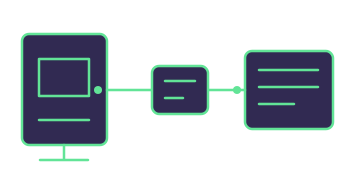
Connect controllers, sensors, gateways, and existing systems via industrial protocols with a single mouse click.
S7 · OPC UA · MQTT · Modbus · REST
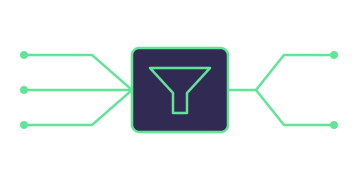
Use pipelines to standardize real-time data and assign it to machines and locations. AI pipelines help you create the necessary processing logic more quickly.
Pipelines · AI Pipelines · Machine Context
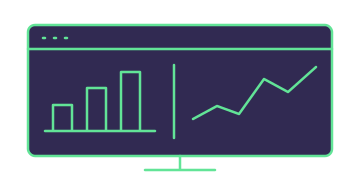
Track metrics in dashboards, analyze trends with charts, or create custom analyses with AI notebooks: The choice is yours!
Dashboards · Charts · AI Notebooks
We support the standard protocols and interfaces for machines and control systems.
Connect structured machine data.
Receive data streams from connected devices.
Use signals from existing controllers.
Capture data from industrial devices.
Connect sensor data through IO-Link masters.
Connect existing systems through APIs.
Connect a machine, process its signals using pipelines, and use the data in dashboards, charts, or AI notebooks. You don't need to set up a separate analytics system for analysis.
How does your machine data get from connection to analysis?
With the adapter library, you can integrate data in minutes—including preprocessing and user-friendly browsing.
Siemens S7 · OPC UA · MQTT · Modbus · REST
View Connectors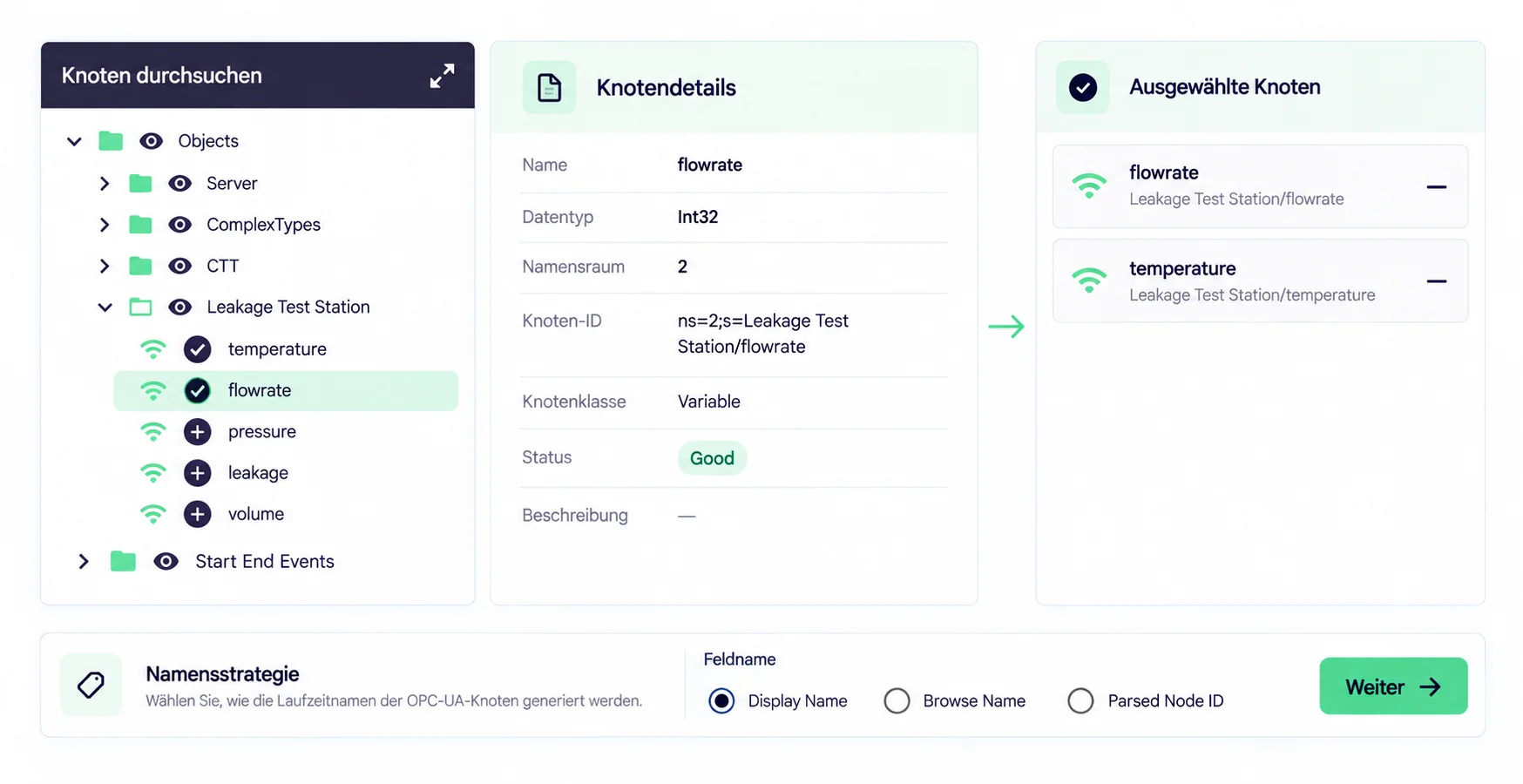
Product in Use
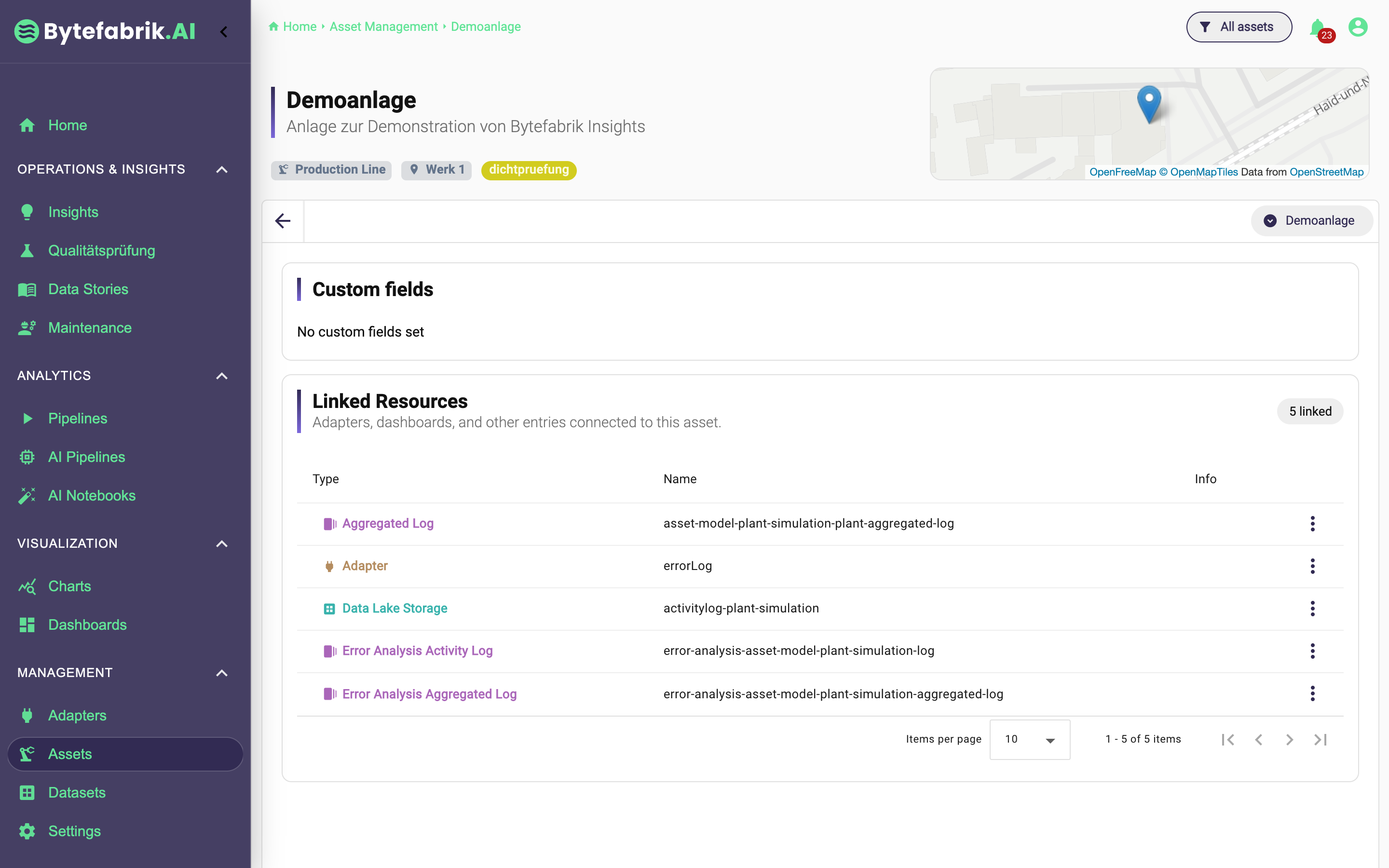
Assign signals to a machine and link data sources and applications to that asset. This way, you can find all your resources in one place and keep track of them.
Behind Bytefabrik are the founders and lead developers of Apache StreamPipes, a world-leading open-source solution for IoT data management with over 60,000 downloads. The IoT Data Hub complements the open platform with additional features and excellent support. Manufacturing Insights extends the platform with preconfigured production analytics.
Apache StreamPipes, including pipelines, dashboards, and charts, supplemented by AI pipelines, AI notebooks, and commercial support.
Compare editions and featuresTurnkey analytics for your production: plant analysis, fault analysis, machine status, process analysis, and product lifecycle data expand the IoT Data Hub.
Explore Manufacturing Insights →The IoT Data Hub can be operated locally at a facility, as a shared on-site platform, or as a distributed architecture with centralized governance.
An edge component can be operated close to machines, control systems, or cells, collect data locally, and synchronize it with a central instance in a controlled manner.
On a local server at the customer's site, the IoT Data Hub collects all signals and makes them available for analysis.
For larger companies, the platform supports the extensive features required for a secure global rollout.
Frequently Asked Questions Before Getting Started
No. The IoT Data Hub can be operated locally and close to the edge. Centralized or cloud-based instances can be added where infrastructure and governance permit.
No. The IoT Data Hub can integrate controllers, gateways, historians, and business applications. Pipelines, storage, dashboards, and analytics are also available directly in the platform.
Apache StreamPipes provides an open platform with connectivity, pipelines, Data Explorer, and live dashboards. The IoT Data Hub adds AI pipelines and AI notebooks for faster data preparation and customized analytics, as well as commercial support. The product comparison shows the feature sets of the different editions.
We initiated Apache StreamPipes. This open-source project is the technological foundation of the IoT Data Hub. Bytefabrik builds additional capabilities on it and supports companies in production use.
We start with a workshop and connect the first data sources straight away. Within a few days to weeks, we onboard a production line in the IoT Data Hub and implement a suitable use case to demonstrate its value to your team. The scope and availability of data determine the timeline.
In a joint workshop, we select a production line and a suitable use case. We connect the first data sources directly to the IoT Data Hub.
We connect the required machines and systems, configure the IoT Data Hub, and set up data collection, storage, and processing for the pilot.
We structure the signals, map them to machines and processes, and implement the selected use case, such as a dashboard, automated data preparation, or custom analysis.
Your team tries out the use case with data from the production line. Together, we assess its value against the agreed objectives and discuss the next steps.
30-minute product demo
In 30 minutes, we'll show you how machine data is fed into the platform, how AI pipelines support data processing, and how dashboards and AI notebooks turn that data into actionable insights. No preparation needed.