Defining Transformations in Technical Terms
Question and objective
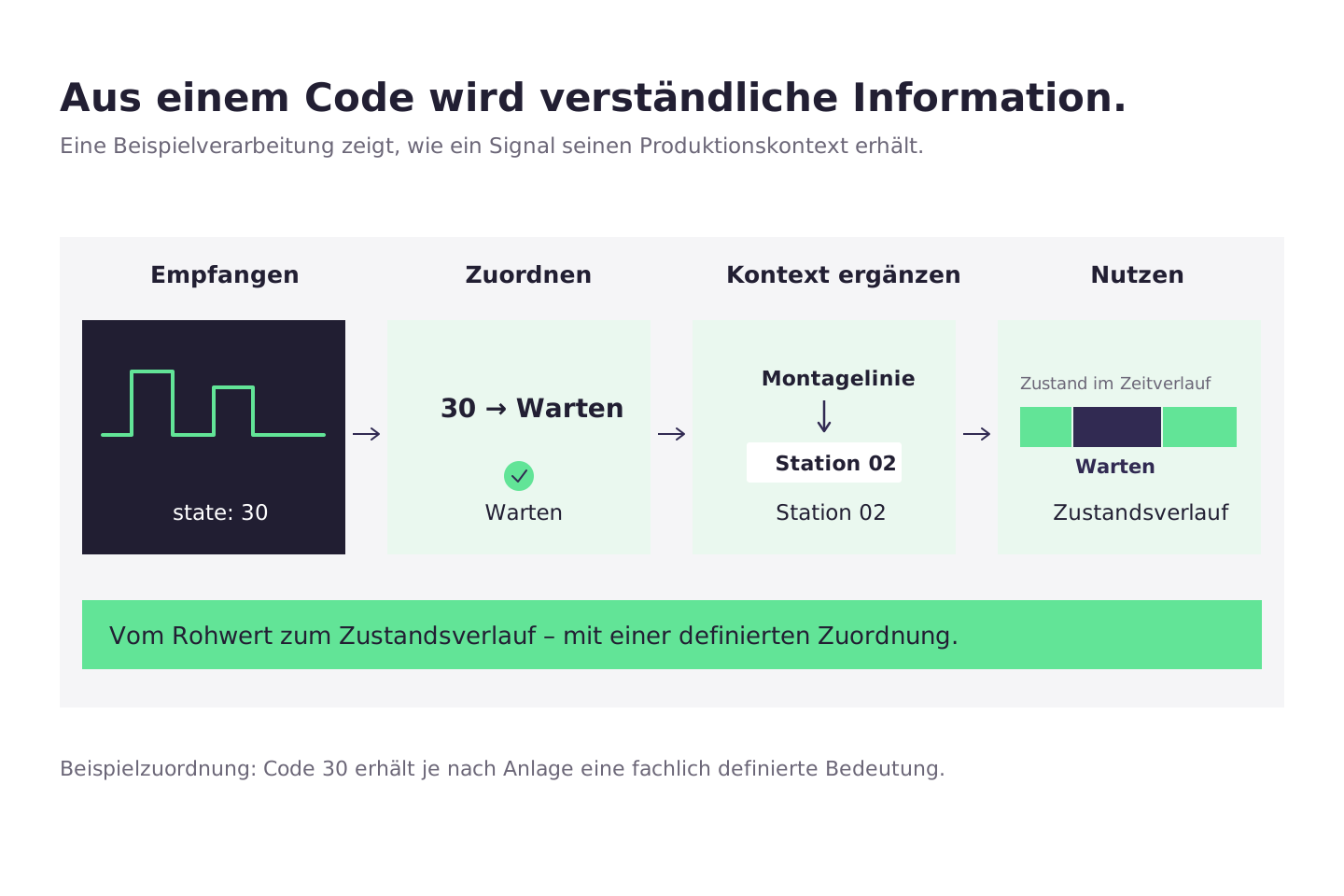
How do technical fields become reliable metrics? A transformation can convert values, standardize fields, or derive a business classification from signals.
Implementation in Bytefabrik
The Script Transformation is available for simple adjustments to the source data. For further processing, use appropriate pipeline elements or custom AI pipelines. The choice of where to implement the processing depends on reusability, complexity, and the required state across multiple events.
Best Practices
Describe each rule with an input example and the expected output:
| Rule | For further clarification, see |
|---|---|
| Convert milliseconds to seconds | Include the unit in the output field. |
| Standardize product identifiers | Evaluate leading zeros and case sensitivity from a technical perspective. |
| Combining Multiple Signals into a Single State | Setting Priority for Conflicting Signals. |
| Calculating Duration from Start and End | Handling Mapped, Missing End, and Delayed Events. |
Check each rule individually before linking multiple steps. For important derivations, keep track of the source events, machine, and time.
What You Should Keep in Mind
A change in data type alone does not convey any business meaning. A numeric product ID remains an identifier and is not a meaningful measurement value.
Unknown states should remain identifiable. Automatically assigning them to the most common state can mask data issues. Additionally, when logic changes, check to determine when old and new results become comparable.
The benefit lies in consistent rules for multiple charts and analyses. Data quality checks ensure that these rules hold true even with real-world inputs.