Select Data Sources
Question and objective
Which source provides the information your analysis actually needs? A measured value can come from a control system, a broker, or a database, but it may have different time resolutions and meanings.
Implementation in Bytefabrik
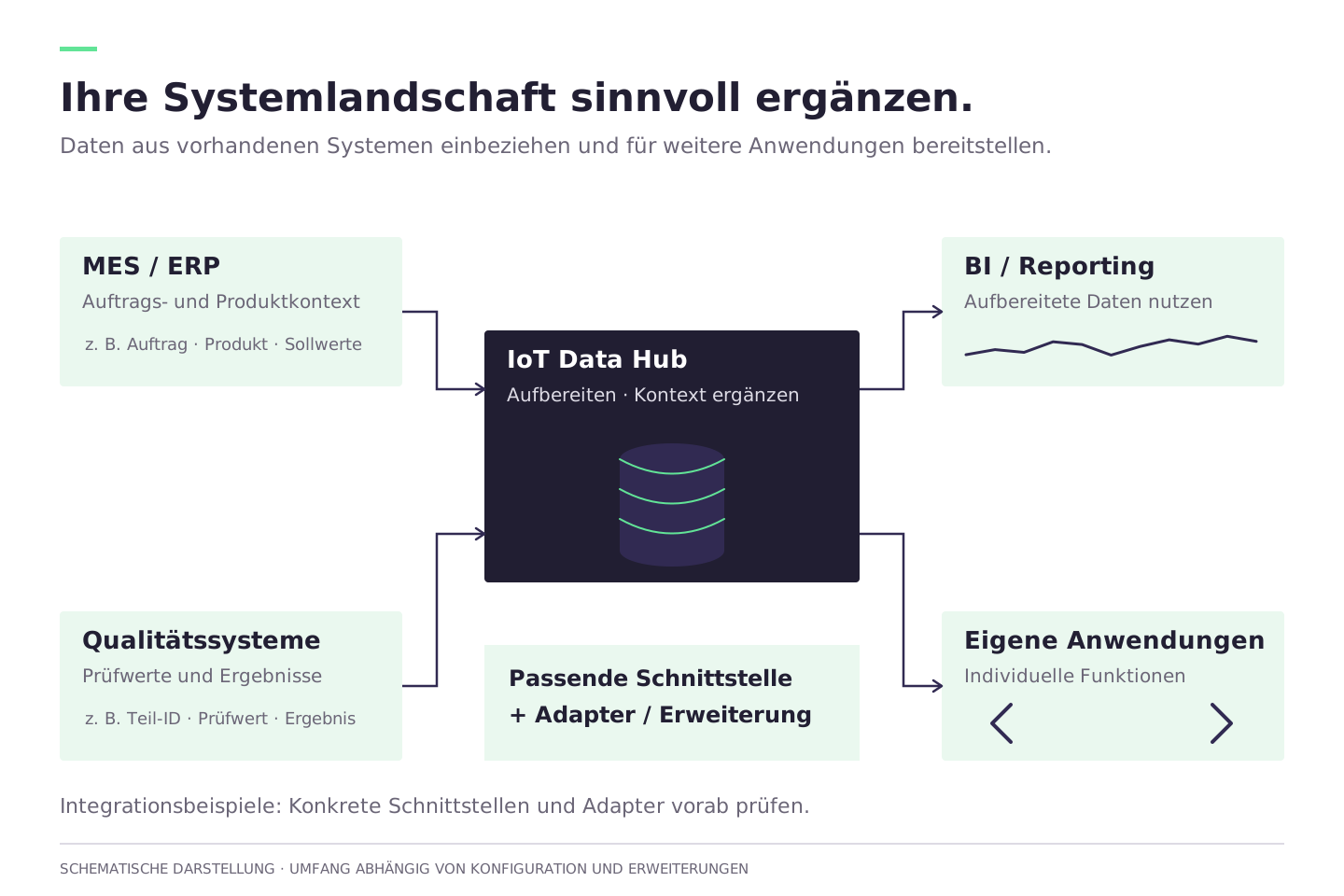
Sources are connected via the adapters available in the installation. Typical access methods include OPC UA, MQTT, files, or databases. For specific protocol and format options, refer to the respective adapter. An HMI or MES cannot be connected directly by default; the interface it provides is the determining factor.
Best Practices: Clarify Before Configuration
| Information | Why it's important |
|---|---|
| Measured value and unit | Prevents technically incorrect comparisons. |
| Event time or query time | Determines the temporal context of the analysis. |
| Transmission Behavior | Distinguishes between periodic values and state changes. |
| Machine and Part Identification | Enables assignment and subsequent linking. |
| Historical Availability Indicates whether past time periods can be reloaded at all. | |
| Responsibilities and Access | Facilitates troubleshooting and controlled changes. |
What You Should Keep in Mind
A source that is queried slowly may miss brief changes in state. An archived average value is no substitute for raw events if individual peaks are to be analyzed later. Therefore, choose the resolution based on the research question.
Also, check with the people in charge to determine what query rate the source can handle. The benefit of a suitable source lies in reliable results and less effort required for later corrections.
Continue with setting up the adapter.