AI Pipelines
Question and objective
How does a one-time data preparation task quickly become an ongoing process? AI pipelines support the generation of code from a description, such as for standardizing raw messages or calculating additional fields.
Implementation in Bytefabrik
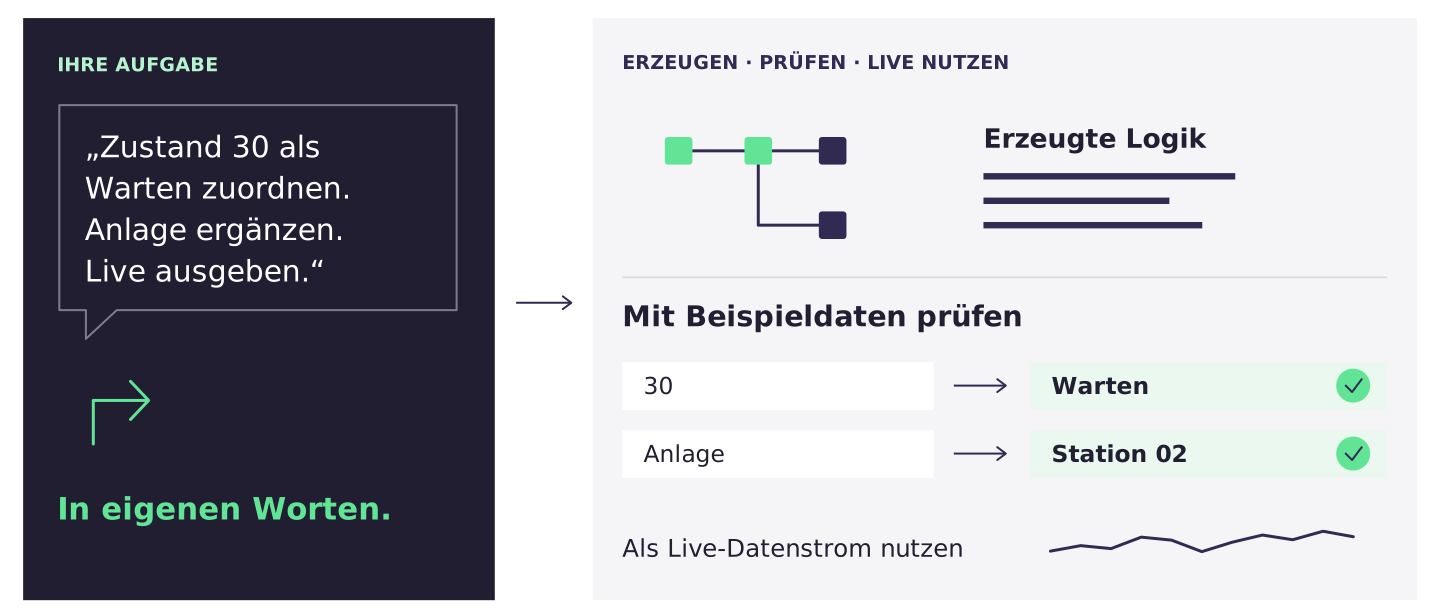
AI Pipelines are a Bytefabrik extension. The editor guides users through input streams, the development of processing logic, testing, and output configuration. The generated code is verifiable. The output schema describes field names and data types and requires a timestamp field. After validation and testing, the pipeline can be saved and started.
This is the difference between code generation and production operations: AI helps develop the logic; once processing begins, it applies that logic to the data.
Best Practices for Implementation
- Define the input fields and the desired output event.
- Describe the rule, including edge cases: What happens when data is missing, states are unknown, or there is no end?
- Review the code and the output format together.
- Use representative test data. Automatically generated examples supplement real-world cases, but do not replace them.
- Check the expected outputs and configure the required sink or storage.
- After startup, check the actual results and operating indicators.
What You Should Keep in Mind
Passing code validation does not confirm technical accuracy. For durations and state transitions, the sequence of events, assignments, and restart behavior must also be taken into account.
Changes to the output schema may affect datasets, charts, and Insights configurations. Validate these adjustments before deployment. Starting a pipeline does not automatically reprocess the entire history.
The benefit lies in reduced manual programming effort while maintaining controllable logic. If existing standard elements are sufficient, a classic pipeline remains a suitable starting point.